![2023-Roseman_Labs-logomerk_color.png]](https://support.rosemanlabs.com/hs-fs/hubfs/2023-Roseman_Labs-logomerk_color.png?width=40&height=40&name=2023-Roseman_Labs-logomerk_color.png)
1. Receiving a data request
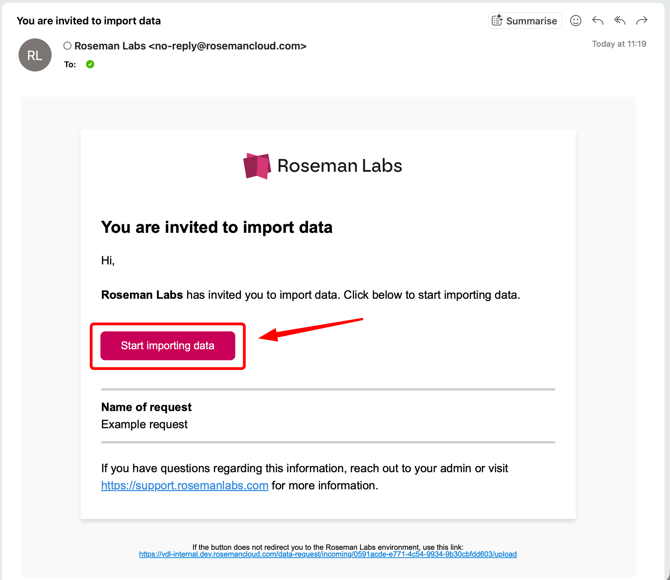
If an analyst invites you to a request, you will receive an email invitation. When you click "Submit data," you will be redirected to the platform where you can log in.
2. View the request in the overview
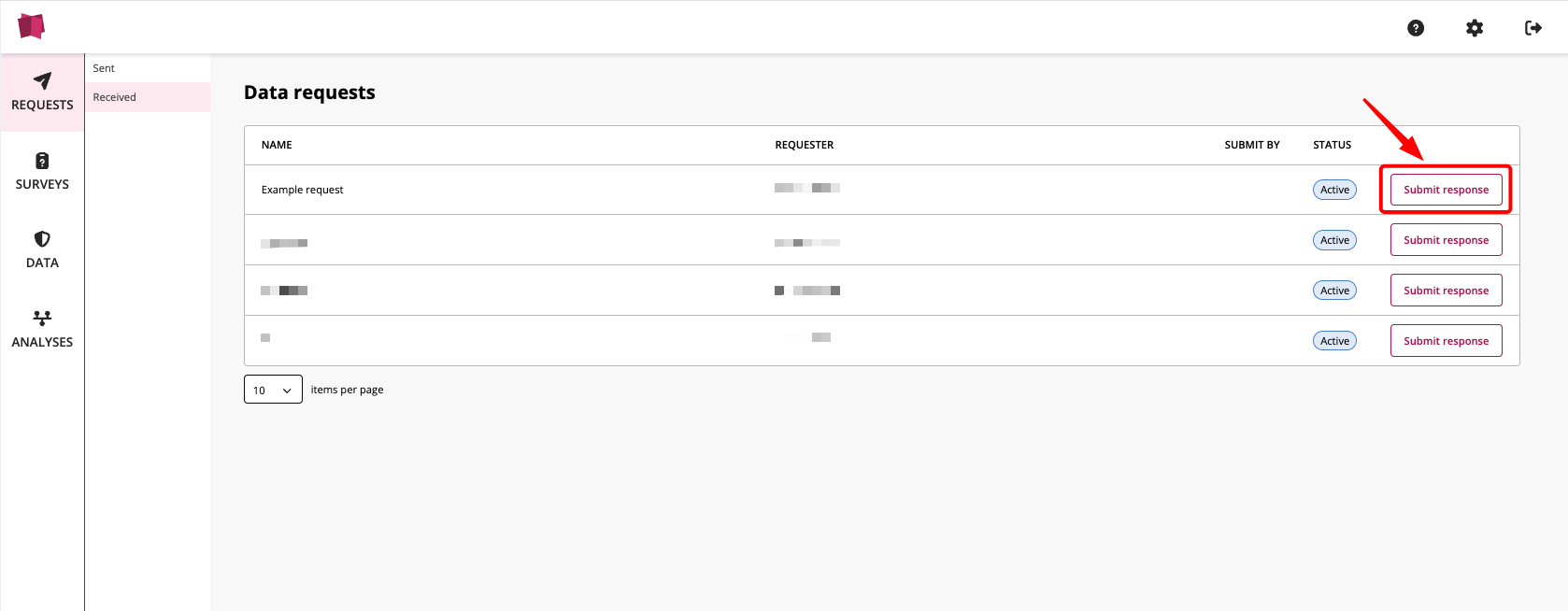
In the menu bar on the left, you will see "Requests." Clicking this will take you to an overview page with all the requests you have received. When you click "Submit data," the relevant request will open and you can import data.
3. Enter general information
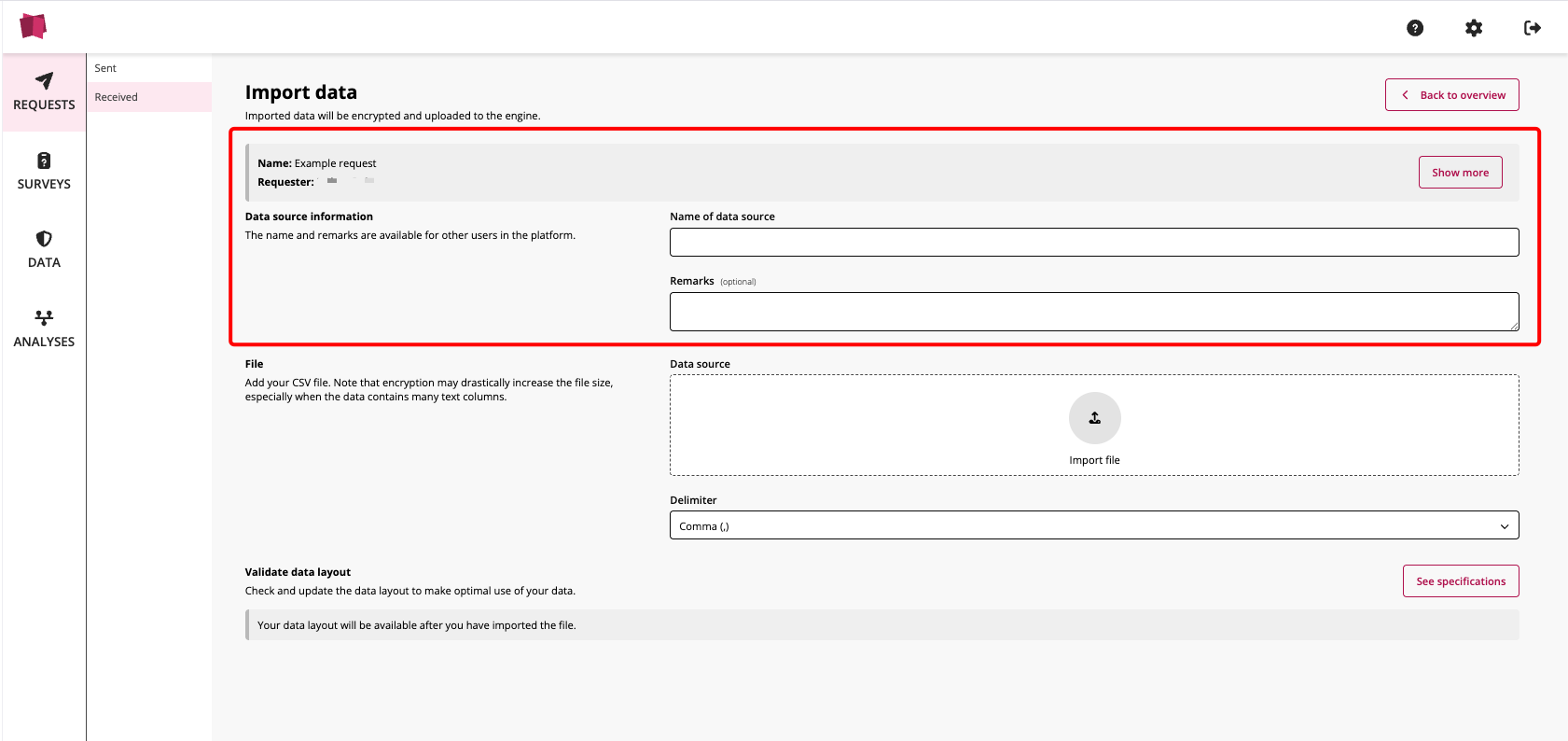
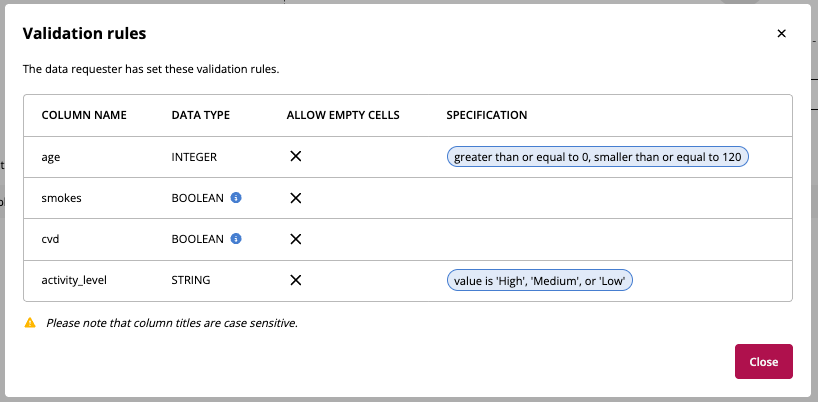
In the grey box at the top of the page, you will find the general information for the request. To see in more detail which data must be submitted and in which format, click "See specifications" at the bottom of the page. A name and description can be provided in the general information. These will be visible to the requester.
4. Adding the file
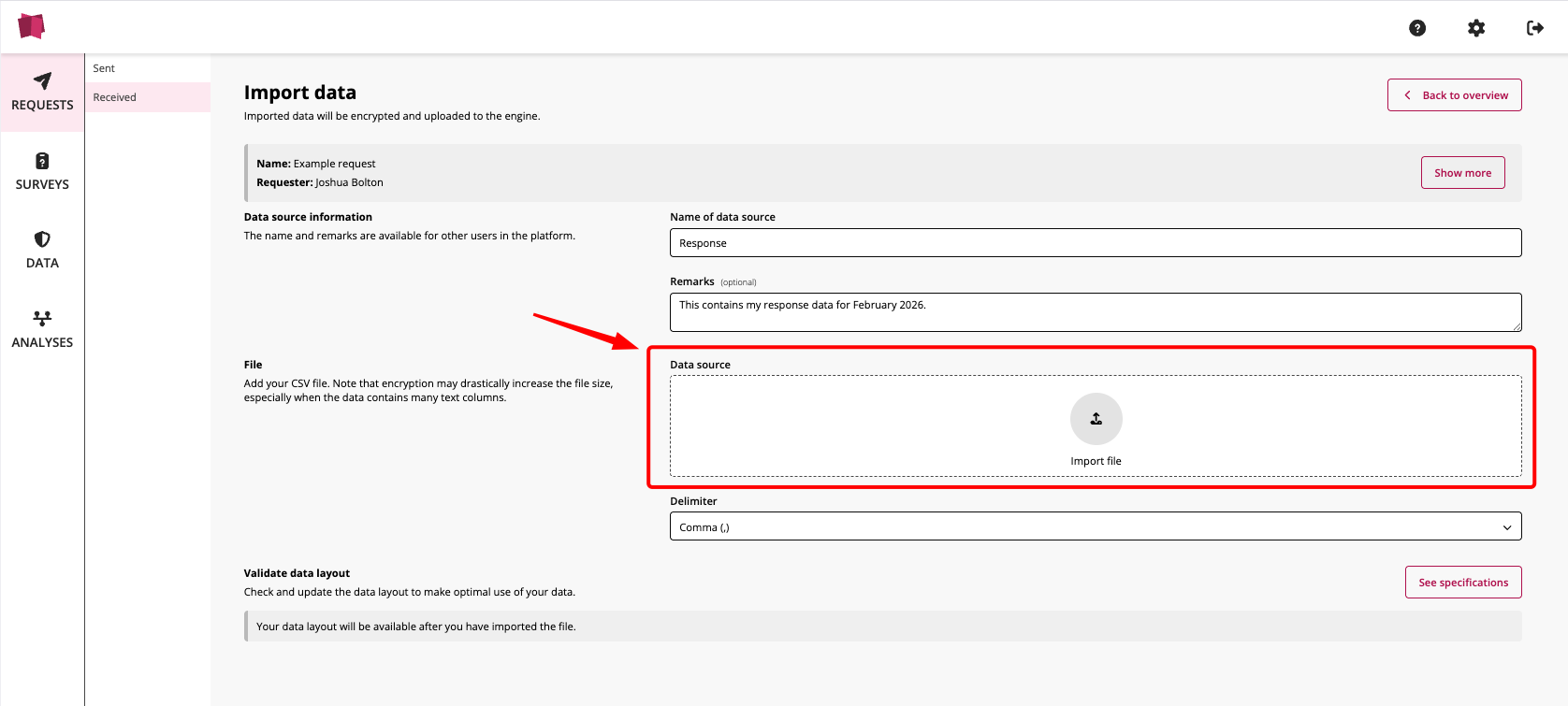
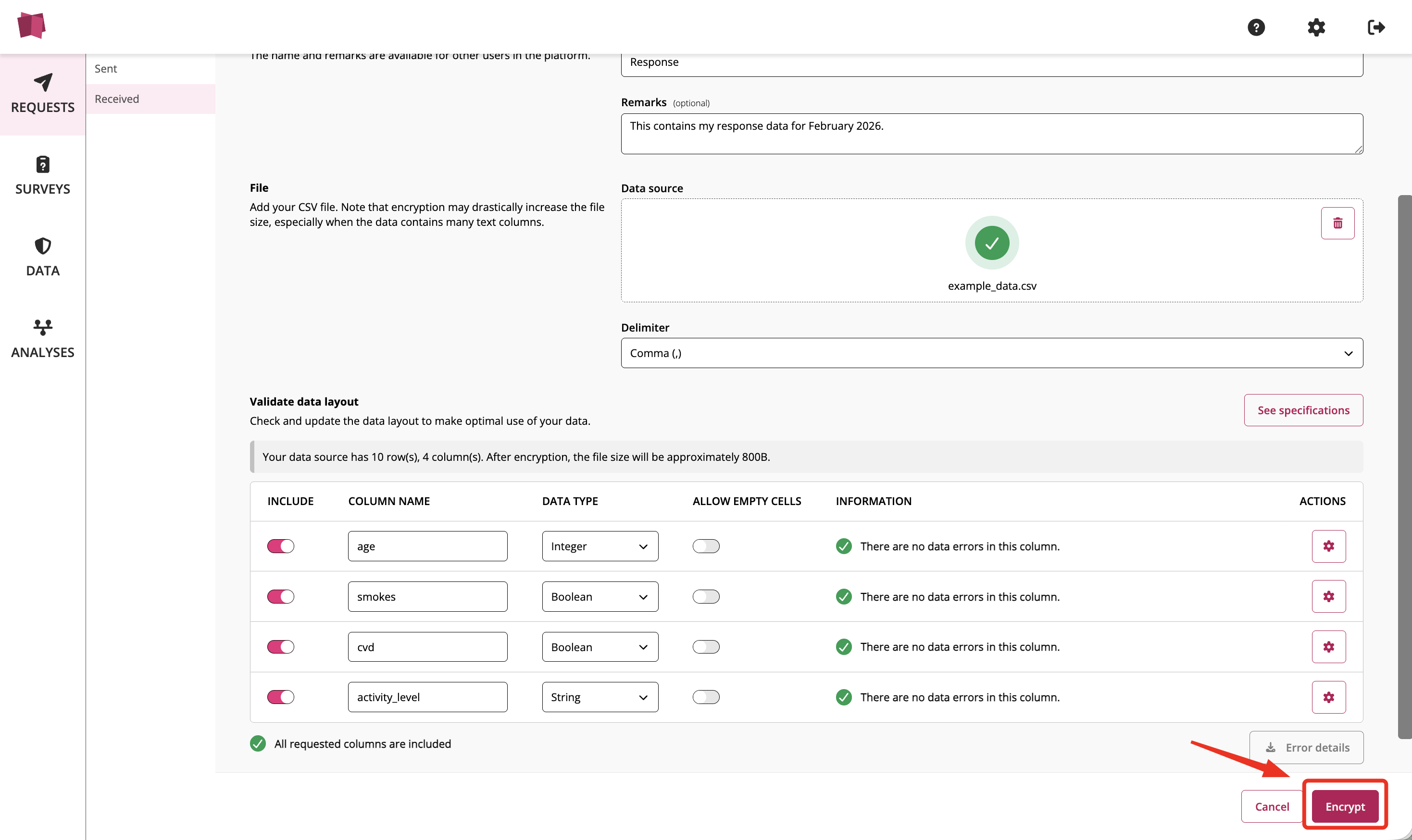
A data source or file can be added if it is in .csv format. Click "Import CSV file" to open a pop-up window and select the file. Please note that the column titles must match exactly; this is also case-sensitive. Once the file has been received, a green icon will be visible, and an overview will appear in the validation window.
If you use commas as decimal separators (common in the Netherlands, e.g. 1.234,56 instead of 1,234.56), make sure your CSV file uses a semicolon (;) as the delimiter so the data can be uploaded.
5. Validate the data schema
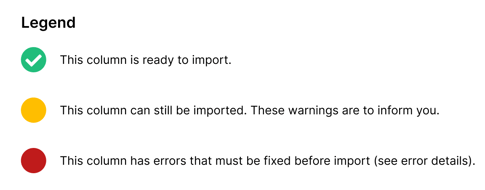
Once the dataset has been imported, the data schema will be visible. If the file meets all specifications, green check marks will appear on the right side.
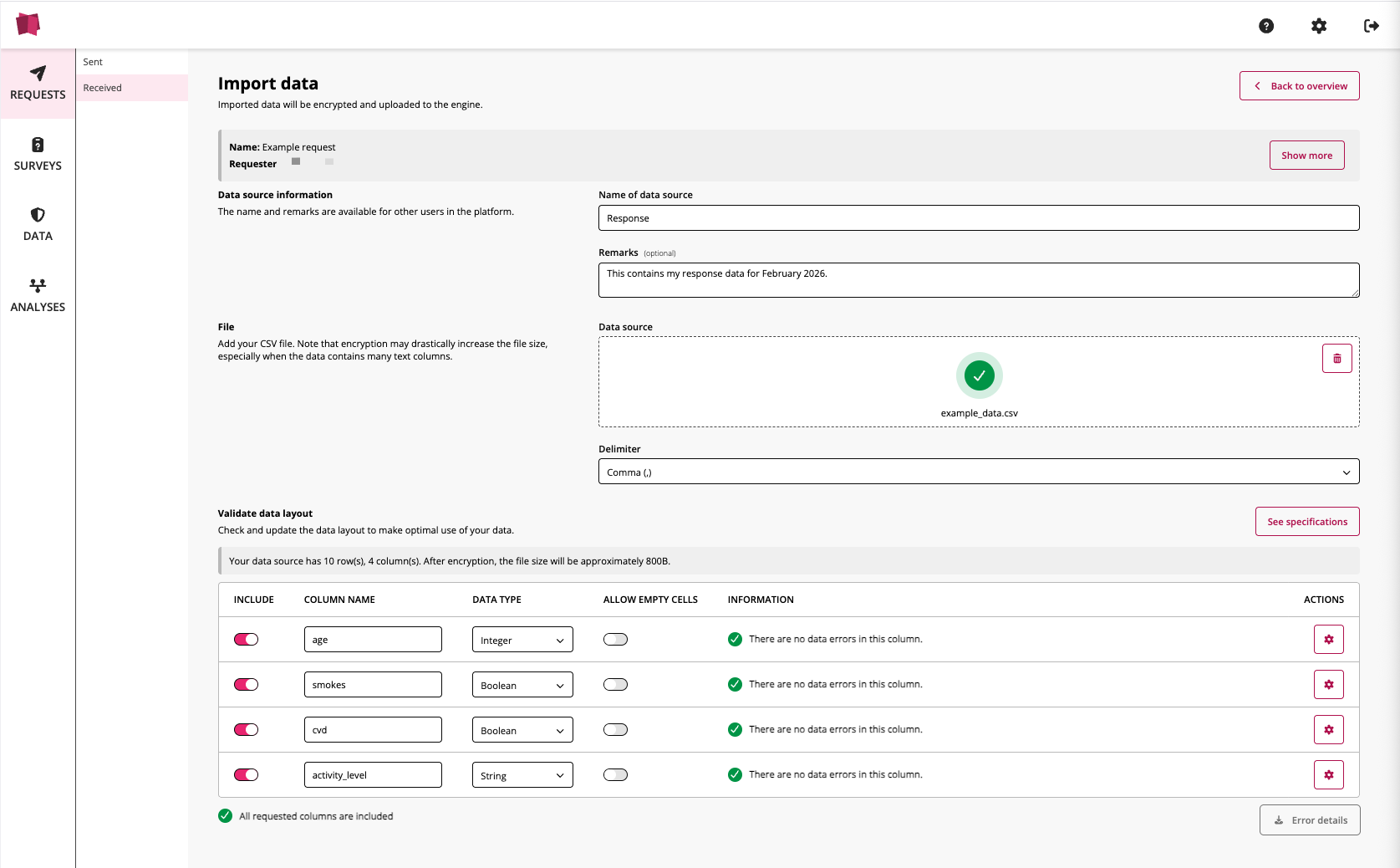
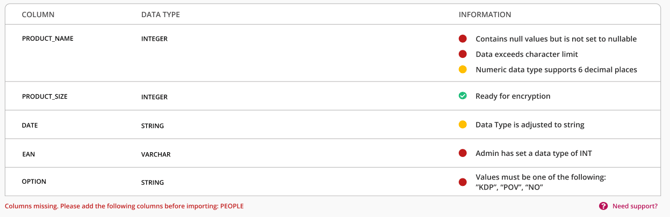
If you see more than just green check marks, error messages will be displayed. These errors must be resolved outside of the environment in a program where you can edit the CSV file (e.g., Excel). Errors can include incorrect column headings, incorrect data types, or the dataset containing more characters than allowed. Once all errors have been removed from the file, it can be re-imported. Otherwise, the file cannot be encrypted. Contact the environment administrator or consult support@rosemanlabs.com for further questions or tips.
6. Encrypt the file
Once everything is entered correctly, you can click "Encrypt." The request is now complete.
To see the specifications that the admin/analyst making the request has set, you can click the "See specifications" button below the import file area that will bring up the columns required and their respective rules.
Can you both send and receive data requests?
This is only possible if you have the analyst role. Should you have been assigned this role, then you will see the addition of a sub-menu that allows you to see the requests that you have sent and those that you have received.